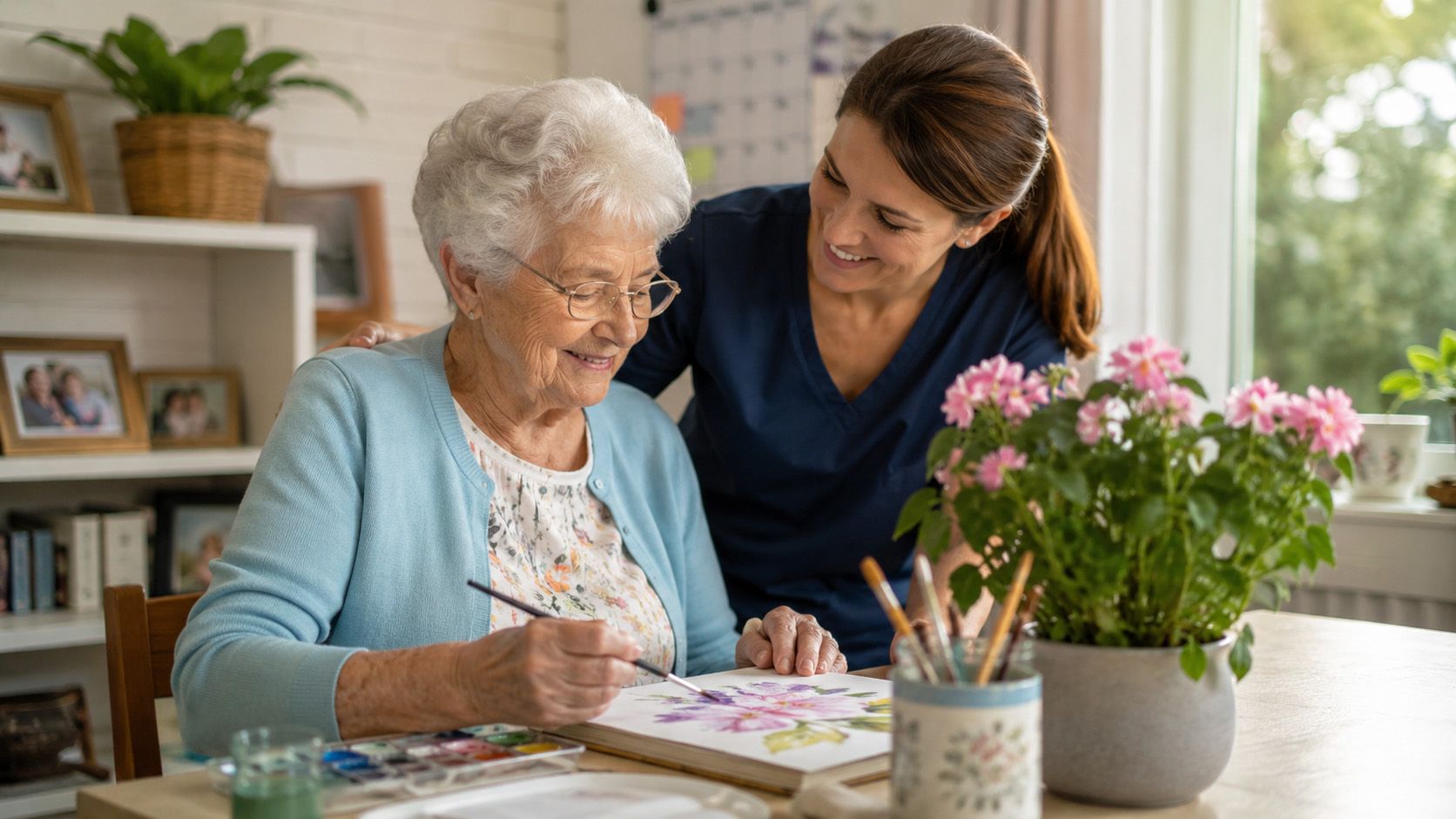

Common Misconceptions About Senior Home Care and What Actually Matters
When families start researching home care, they bring assumptions with them. Some come from things they've heard. Some from limited past experience. Some from the way home care is portrayed in the broader conversation about aging.
A number of those assumptions turn out to be wrong. And because families make significant decisions based on them, about timing, about cost, about what kind of care to pursue, it's worth addressing them directly.
------------------❤️------------------
Misconception 1: "All Home Care Agencies Are Basically the Same"
This is probably the most consequential misconception, because it leads families to choose based on price alone.
Home care agencies vary enormously, in how they recruit and screen caregivers, in what training they require, in how actively they manage care after placement, in whether there's clinical oversight, in how they handle coverage when a caregiver is unavailable, in how they match caregivers to clients, and in what a care plan actually contains.
The difference between an agency that deploys caregivers and steps back, and one that maintains active clinical involvement throughout the care relationship, is not a minor operational detail. It shapes what daily care looks like, how quickly problems get caught, and whether the arrangement holds up when circumstances change.
Asking specific questions, not just about hourly rate, but about caregiver training, backup coverage, care plan review processes, and clinical oversight, is how families identify that difference before it matters.
------------------❤️------------------
Misconception 2: "Home Care Is a Last Resort"
Many families wait far longer than necessary to bring in home care because they associate it with a level of need that hasn't been reached yet. Home care, in this view, is what you do when things have gotten serious, not when someone could use some support.
The opposite framing is more accurate and more useful: home care is most effective when it begins before a crisis, not in response to one.
Early home care, a few hours a week to help with meals, transportation, medication management, and companionship, does something that reactive care cannot. It establishes routine, builds a trusting caregiver relationship, and creates a baseline of support that can adapt as needs change. It also keeps families informed about how a parent is actually functioning day to day, rather than relying on periodic visits that may not capture the full picture.
Families who begin home care early consistently report that the transition, when greater care is eventually needed, is significantly smoother. The relationship is already there. The trust is already built. The adjustment that feels so difficult when care begins suddenly doesn't have to happen in a moment of crisis.
------------------❤️------------------
Misconception 3: "A Good Caregiver Is All You Need"
An exceptional caregiver makes an enormous difference. But a caregiver without professional infrastructure behind them is not the same as an agency-supported caregiver, and the gap matters.
What does professional infrastructure actually provide? Clinical oversight from a Director of Nursing who reviews care plans and catches things that fall outside a caregiver's scope. A coordinator who ensures coverage when the primary caregiver is unavailable. A structured process for reporting observations and escalating concerns. Liability coverage that protects the family if something goes wrong. A formal care plan that is reviewed and updated as needs change.
These things don't replace the caregiver relationship. They support it, and they protect the family from situations where that relationship is the only thing standing between good care and a gap in it.
This is the substance behind the private duty versus agency care distinction. A privately hired caregiver may be talented and trustworthy. But the family becomes responsible for everything that an agency otherwise provides. That responsibility is manageable until it isn't, and it tends to become unmanageable at exactly the moments when it's least convenient.
------------------❤️------------------
Misconception 4: "My Parent Will Never Accept a Caregiver"
Families sometimes delay exploring home care because they anticipate resistance so strongly that they don't want to have the conversation. And it's true, initial resistance is common. But it's also frequently surmountable, and assuming it isn't leads families to wait until circumstances force the issue.
The resistance most older adults feel toward home care is not usually about the care itself. It's about what accepting care represents: a loss of control, an acknowledgment of limitation, a change in how they see themselves. Addressed directly, with genuine respect for those feelings and a process that involves the older adult rather than simply presenting them with a decision, that resistance usually softens.
The families who report the smoothest transitions are typically those who approached the conversation early, involved their parent in the process, and started with a limited scope of care that felt manageable rather than overwhelming. The parent who flatly refused the idea in February is often, by May, looking forward to the caregiver's visits.
------------------❤️------------------
Misconception 5: "Home Care Is Just Help With Chores"
The tasks that home care covers, bathing, dressing, meal preparation, light housekeeping, medication reminders, transportation, can sound, listed out, like domestic assistance. And for families focused on functional needs, that framing makes sense.
But reducing home care to task completion misses something important about what it actually does.
A caregiver who spends several hours a week with an older adult becomes, over time, a consistent human presence, someone who notices mood changes, engages the person cognitively and socially, provides the kind of reliable companionship that family members, even devoted ones, often can't maintain at the frequency needed. The tasks are the scaffolding. The relationship is what produces the outcomes: reduced isolation, maintained cognitive function, earlier identification of health changes, and a genuine improvement in quality of life.
Families who hire a caregiver expecting domestic help and nothing more sometimes underutilize what good home care can provide. The full value shows up when the care plan is designed around the whole person, what they need functionally, cognitively, socially, and emotionally.
------------------❤️------------------
Misconception 6: "We Can Handle This Ourselves"
Family caregiving is one of the most demanding roles a person can take on, and one of the least acknowledged. The assumption that family should be the default, and that needing outside help represents a failure of love or commitment, is both common and damaging.
Family members who serve as primary caregivers are at significantly elevated risk of burnout, depression, and their own health deterioration. The impact on marriages, careers, and other relationships is well-documented. And when a family caregiver reaches a breaking point, the consequences tend to fall hardest on the person receiving care, precisely when stability matters most.
Professional home care isn't a replacement for family involvement. Families who engage home care remain deeply involved, often more effectively so, because they're not depleted. The caregiver handles the physical and logistical demands. The family provides what only family can: history, love, and presence that isn't tied to a care schedule.
Choosing to bring in professional support isn't a retreat from caring. It's a sustainable form of it.
------------------❤️------------------
Misconception 7: "Once We Set It Up, It Runs Itself"
Home care requires ongoing attention, from the family, from the caregiver, and from the care team. A care plan written at intake and never revisited gradually becomes a document about someone who no longer exists in quite the same form. Needs change. Health conditions evolve. What worked six months ago may be insufficient or simply wrong for the person today.
Families who stay engaged, who communicate regularly with the caregiver, maintain contact with the care coordinator, and treat the care plan as something to be updated rather than filed, consistently see better outcomes. Not because they're micromanaging, but because they're providing the continuity of knowledge that no agency can replicate.
The families who have the most difficulty are often those who, understandably relieved that care is in place, step back entirely and assume the system will flag problems on its own. Good agencies have structures to catch many things. But an engaged family is part of the care team and the part that often catches what everything else misses.
------------------❤️------------------
What Actually Matters
Past the misconceptions, the questions that consistently predict good outcomes are simpler than they might seem:
Is the caregiver a genuine match for this person, not just technically qualified, but humanly suited to them? Is the care plan built around who this person actually is, not just what they need? Is there professional infrastructure that supports the caregiver and protects the family? Does the family stay engaged and informed? And does the arrangement adapt as things change?
These aren't complicated criteria. But they require choosing an agency that takes them seriously, and families asking the right questions early enough to get honest answers.
At Philia, these questions aren't uncomfortable. They're the ones we'd want families to ask. If you're in the Washington DC, Bethesda, or Arlington area and want to have that conversation, we're here for it.
While the information provided in this blog is intended to be informative and helpful, it's important to consult with a qualified professional for personalized advice. If you have any concerns or questions about your health or specific medical conditions, don't hesitate to reach out to your physician or another trusted healthcare provider. Your health is important, and seeking professional guidance ensures you receive the best care tailored to your individual needs.