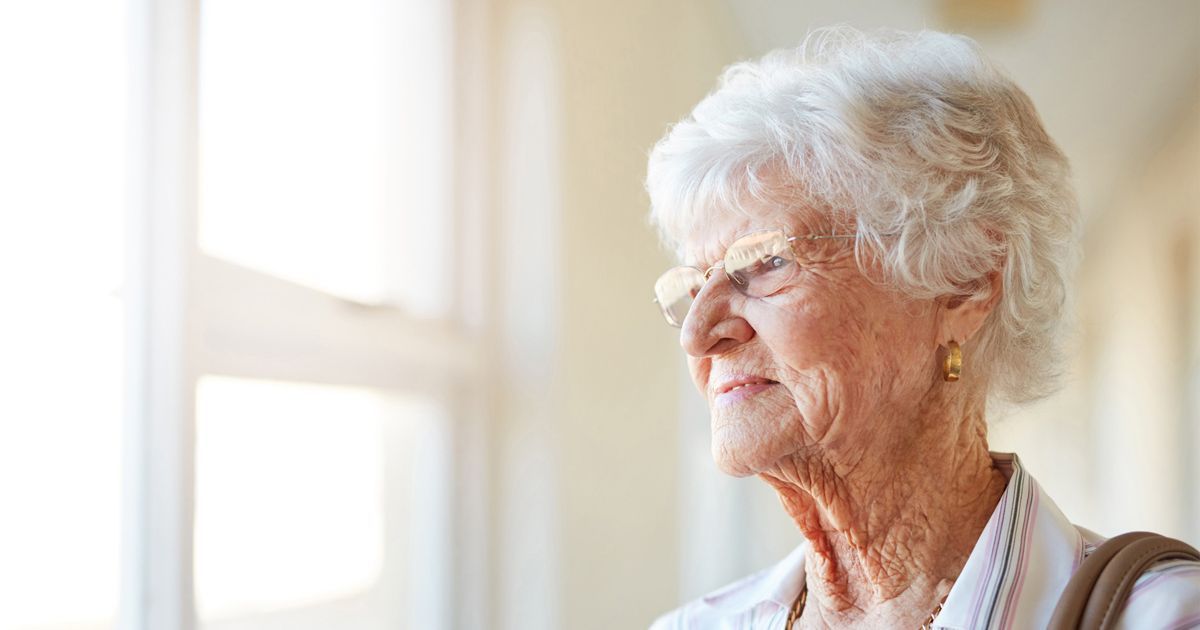

As Long as I Can Still Make Her Dance
As Long as I Can Still Make Her Dance
Over the last year, my grandmother’s life has changed more drastically than I ever could have imagined.
Not long ago, she was living in a beautiful home in a community she knew. It was her space. Her routine. Her independence. After losing my grandfather eight years ago, she somehow kept going. Of course she missed him, and life was different without him, but she was still strong. She still had her home. She still had a large family surrounding her with love and support.
Then came the move to assisted living.
It was a beautiful place and she had a nice apartment, but it was still a change. She was no longer in the home that had been hers. She was no longer surrounded by everything familiar.
Then she fell. That fall brought her to rehab, and unfortunately, she never made it back out.What was supposed to be rehabilitation eventually became long-term care. Now she battles UTI after UTI. Physical therapy and occupational therapy seem to do only so much. Her legs have become so weak that she is essentially wheelchair-bound. Severe carpal tunnel in her hands, even after multiple surgeries, has made something as simple as feeding herself difficult.
Medications make her feel sick. Food, something she once enjoyed, doesn't bring the same pleasure anymore. And sometimes I can't help but think about how much changed once she was removed from her home and everything she knew.
There is something about losing your independence that changes a person.
It isn't only losing the ability to walk across the room or prepare your own meal. It's losing the ability to decide what your day looks like. When you eat. Where you go. When you leave. What happens next. Little by little, the world becomes smaller.
I'm her first grandchild, and although I'm probably a little biased, I've always liked to believe I'm her favorite.
Our relationship has always been special to me, and now I find myself trying harder than ever to make her smile.
I have two little children of my own now, and when we visit her, I try to bring their energy, innocence, and chaos into her world. Kids have this incredible ability to make everything feel normal for a moment. They don't see the wheelchair or the long-term care facility the way adults do. They just see their great-grandmother.
And I see how much that matters. This past month, we were able to bring my grandmother out for my cousin's wedding.
For a few hours, she wasn't simply a resident in long-term care. She was Grandma. She was surrounded by her family. She laughed. She smiled. She was part of the celebration. And we danced.
Music has always seemed to reach her in a way that almost nothing else can anymore. So I brought her onto the dance floor in her wheelchair. I wheeled her around while the music played. We laughed. We danced with everyone else.
At one point, we even joined the conga line. It sounds like such a small thing. But watching her smile, it didn't feel small at all.
For those moments, she wasn't thinking about what her legs couldn't do or what her hands couldn't do. She wasn't sitting in a room waiting for someone to help her with the next part of her day. She was participating. She mattered. She had a little piece of her independence back. And I think that's what I want to remember most.
It is difficult watching someone you love become a different version of the person you've always known. There is a strange kind of grief that happens while someone is still here. You miss the person who could walk into the kitchen, make herself something to eat, get into a car, go shopping, dance at a wedding, or simply decide what she wanted to do that day.
I miss that version of my grandmother.
But she's still here. Her laugh is still there. Her love for her family is still there. And somewhere underneath the illnesses, medications, wheelchair, frustration, and exhaustion is the same woman who has loved me my entire life.
Maybe I can't give her back everything that has been taken away.
I can't give her back her house.
I can't make her legs work the way they once did.
I can't take away every infection or make her hands cooperate. But I can show up.
I can bring my children.
I can make her laugh.
I can play the music she loves.
I can wheel her onto the dance floor.
I can remind her that she is not simply someone being cared for.
She is Grandma.
She is still part of this family.
She is still important.
And as long as I have the opportunity to give her those moments—to make her smile, make her laugh, and maybe even make her feel a little bit like herself again—I will. Right until the very end. And if there's music playing, I'll make sure she dances...
While the information provided in this blog is intended to be informative and helpful, it's important to consult with a qualified professional for personalized advice. If you have any concerns or questions about your health or specific medical conditions, don't hesitate to reach out to your physician or another trusted healthcare provider. Your health is important, and seeking professional guidance ensures you receive the best care tailored to your individual needs.